Ketamine: Complete Guide
What ketamine is, how it works, recognised medical uses, short- and long-term effects, dependence and the main health concerns.
Read the guide →Independent UK ketamine information
Ketamine has legitimate medical uses, growing interest in mental health treatment and serious risks when use becomes frequent or moves outside regulated healthcare. Ketamine Plug UK brings the medical evidence, UK law, safety information and common terminology together in one place.

The word ‘ketamine’ can describe very different situations. In hospital medicine, it may mean a regulated anaesthetic administered by clinicians. In specialist mental health care, it may refer to off-label ketamine treatment or licensed esketamine. Outside healthcare, the same word may be attached to an unknown powder, crystal or liquid whose identity and concentration cannot be confirmed from appearance alone.
Those distinctions are easy to lose when medical information, online marketing and informal terminology are mixed together. Our aim is to separate what is known from what is claimed, using UK guidance, medicines information and medical research wherever possible.
Start here
Six detailed guides cover the main questions readers come to this site to understand.
What ketamine is, how it works, recognised medical uses, short- and long-term effects, dependence and the main health concerns.
Read the guide →Powder, crystals, liquid, ketamine hydrochloride, rock, raw, sugar and the difference between scientific terminology and informal descriptions.
Understand the terminology →Bladder damage, abdominal pain, liver complications, dependence, interactions and warning signs that should not be ignored.
Explore the risks →Anaesthesia, pain treatment, ketamine for depression, esketamine, private treatment and the current position on NHS access.
Read about medical use →Class B status, Schedule 2 controls, possession and supply offences, prescriptions, travel and controlled-drug regulation.
Understand UK law →The legal position, unregulated sellers, counterfeit or mislabelled products, pharmacy regulation and why medical treatment differs from online supply.
Read the guidance →Health matters
One of the difficulties with repeated ketamine use is that early problems can appear manageable. Needing to urinate more often, recurring abdominal pain or gradually increasing tolerance may not initially feel like reasons to seek medical help.
They can still matter. Frequent exposure has been associated with bladder and urinary-tract damage, abdominal complications, liver and bile-duct problems, dependence and cognitive effects. Recognising a pattern early gives someone a better opportunity to seek appropriate medical support.
Read the ketamine safety guide →
Medical treatment

A regulated ketamine treatment involves a known medicine, an appropriate clinical reason for using it, professional responsibility and monitoring. That is different from simply obtaining a substance described as ketamine.
Ketamine remains an established medicine in anaesthesia and selected pain settings. Interest in psychiatric treatment has also grown, particularly around treatment-resistant depression, although licensing, evidence and NHS availability differ between ketamine and esketamine.
How medical ketamine is used in the UK →Powder · Crystal · Liquid · Hydrochloride
Terminology
Some ketamine terms describe genuine chemistry. Others describe little more than appearance.
Ketamine hydrochloride has a specific chemical meaning. ‘Rock ketamine’, ‘sugar ketamine’ and ‘raw ketamine’ do not have the same scientific status. Crystal size, colour or texture cannot establish purity or pharmaceutical origin.
Explore the forms of ketamine →
From the journal
Detailed articles explore individual questions that sit underneath our main guides.
Ketamine
Ketamine infusion therapy in the UK is often mentioned as one of the available treatment options for patients suffering from severe or…
Read article →Ketamine
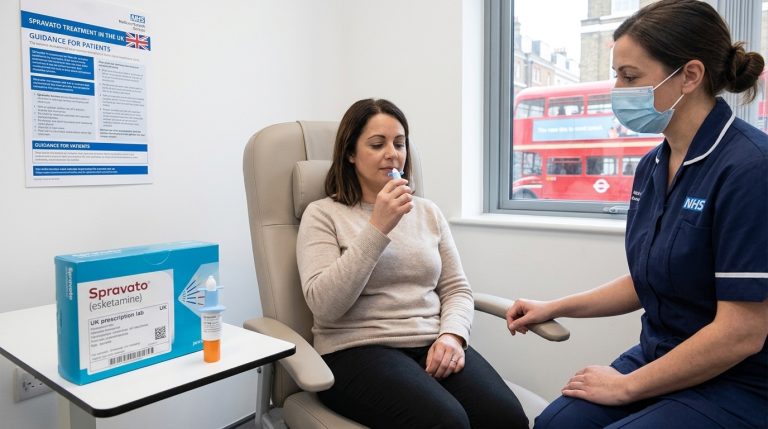
Esketamine nasal spray (under the brand name Spravato) is a prescription medication used in certain adults with depression who didn’t get enough…
Read article →Ketamine
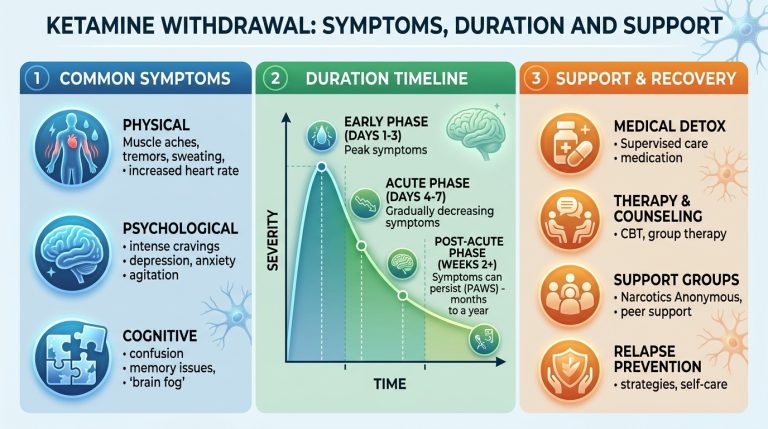
For some individuals, it is challenging to discontinue ketamine once it’s been used on a frequent or substantial basis. To everyone, the…
Read article →Ketamine
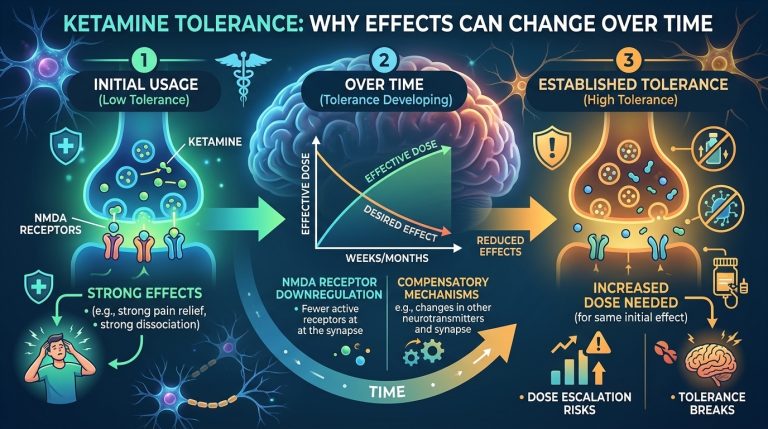
Ketamine can have various effects on individuals. But the results can be different if an individual uses it frequently. A possible explanation…
Read article →Ketamine
The time that Ketamine effects last will vary from person to person. The main effects go away rather quickly, however some might…
Read article →Ketamine
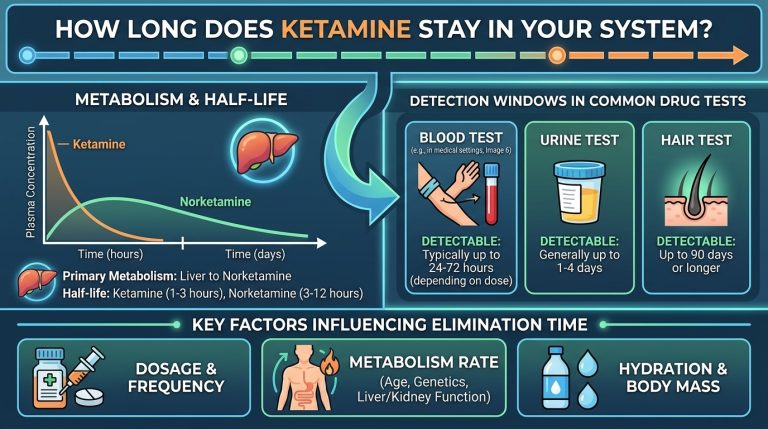
The answer to how long ketamine stays in your system depends on the person to whom you ask. This answer may vary…
Read article →How we work
Medical and health claims are based primarily on NHS guidance, NICE, the MHRA, UK government publications, medicines information and peer-reviewed research.
Drug classification, healthcare access, medicines regulation and treatment guidance can differ between countries. We explain the UK position where it matters.
Higher-risk clinical content can be reviewed by a qualified medical reviewer. Reviewed pages display the reviewer and review date rather than implying every article has received clinical sign-off.
Guidance and evidence change. Our editorial and corrections policies explain how information is checked, updated and corrected.
About Ketamine Plug UK
People searching for ketamine information often encounter several worlds at once: medical research, treatment advertising, informal drug terminology, legal questions and claims made by unregulated sellers.
Ketamine Plug UK exists to make those distinctions easier to understand. We do not rank illicit sellers or provide sourcing instructions. Our role is to explain the evidence, terminology, risks and UK regulatory context clearly enough for readers to make better-informed decisions about their health.
Read our purpose →Persistent urinary symptoms, blood in the urine, severe or recurring abdominal pain, or difficulty controlling ketamine use are reasons to speak with a healthcare professional.
For urgent medical problems, use NHS emergency services. For help with drug use, a GP or local drug treatment service can provide confidential support.
NHS: getting help for drug use →