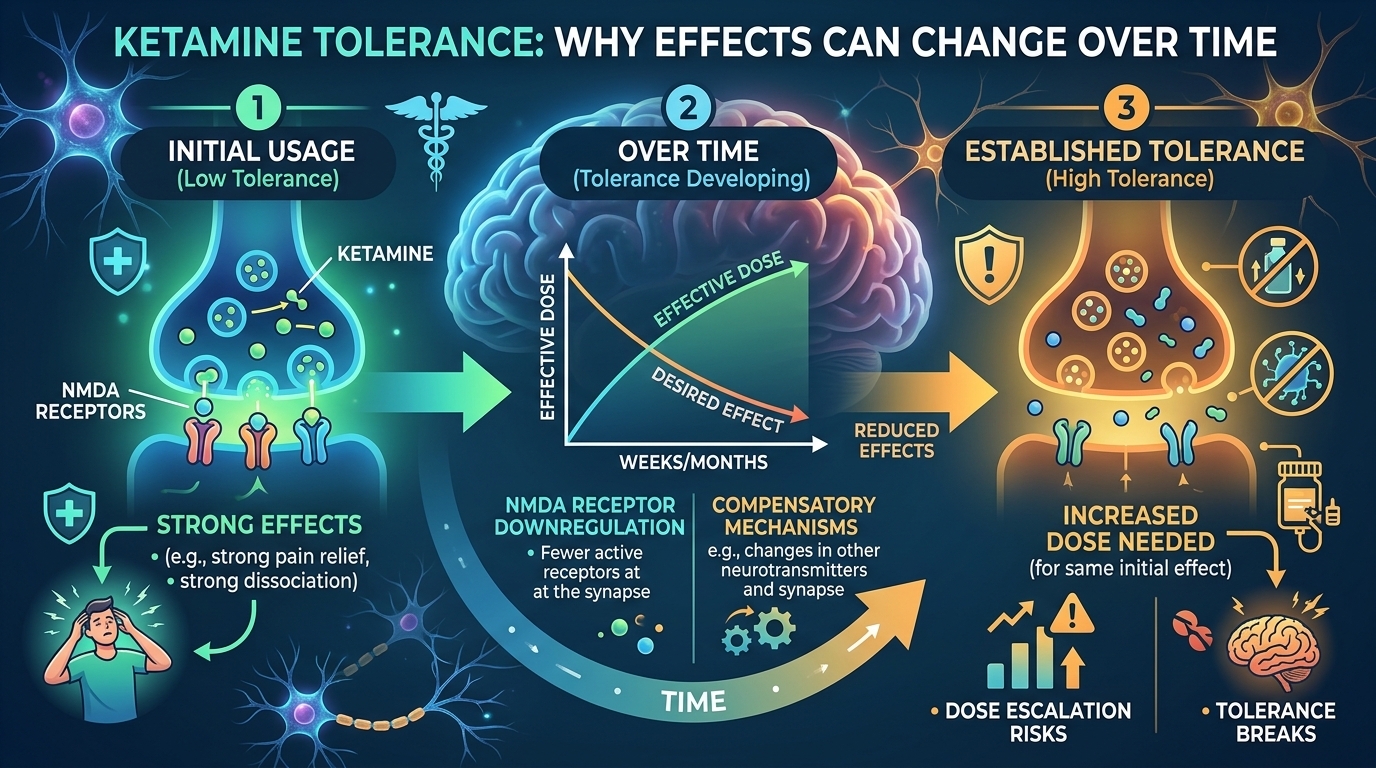
Ketamine can have various effects on individuals. But the results can be different if an individual uses it frequently. A possible explanation for this is tolerance. Tolerance is when the body adapts to a substance after exposure. So the same dose might not have the same effect as previously.
Tolerance to Ketamine may be related to frequency of use and quantity used. This may also result in an increased risk of other complications. Sympketoms can be addiction, urinary issues and abdominal pain. Having greater awareness of tolerance will enable individuals to become aware if there are changes in how they are using it, and provide them with indicators as to when to seek assistance.
What is Ketamine Tolerance?
Tolerance occurs when the body gets used to, or is no longer as sensitive to, a substance after continued use. Someone may observe that the effects are reduced from previous ones. They may then believe that they should take more or they should take their fixings more frequently to achieve the same results.
Some grow up more slowly than others in their tolerance. This may be variable depending on frequency of use of ketamine, dose taken and individual differences.
Also keep in mind that if you don’t feel the impact of the drug, it is not harmless. Some risks may persist even when the impacts are less discernable.
How Does Ketamine Tolerance Develop?
Your brain and body can get used to taking ketamine. Over time the same amount could result in a different reaction. This can gradually occur. It may go unnoticed at first, to the person. To a certain extent over time these may realise that the quantity that used to matter has lost much of its effect.
This can result in someone using more ketamine or using it more frequently. This can raise the possibility for unwanted effects. If a person is tolerant, it does not mean that the person is doing something wrong. A change that may occur with chronic use of drugs. It is beneficial to identify it early.
Why Can Increasing Use Raise the Risk?
Some may react by taking more ketamine if taken over time, and develop a tolerance to it. This can develop into a vicious circle of addiction. Increased or repeated exposure may increase the likelihood of physical or mental health issues. It may also make the regulation of the use of ketamine difficult.
Consequences are out of control. An individual could also get affected in different ways at different times. The risks may vary depending on other substances, health factors, and the context. Using more to overcome tolerance does not restore the original effect in a safe way. Instead, it can heighten the risk for harm.
Tolerance and Dependence Are Not the Same
Tolerance and dependence are not necessarily the same thing. Tolerance implies that the body is no longer likely to respond to a substance. An individual might require greater amounts to experience the same effects.
Substance dependence occurs when a person has come to rely on another substance in their body or brain so much that quitting can be a challenge. It’s possible for some persons to have symptoms following the sudden cessation of a substance.
One does not necessarily have an obvious problem of addiction or dependence to take place in order to develop tolerance. Similarly, tolerance is not the only symptom of dependence.
That is why it’s useful to consider the overall pattern of use instead of focusing on a single sign.
What Happens When Ketamine Use Becomes More Frequent?
Ketamine may change its effects in individuals if it’s used frequently. The individual might find it less prominent or not quite as long lasting.
They might also become more interested in using ketamine. Its use can become a habit. It can be challenging to reduce intake, even if it is desired.
This is also an increased risk of physical difficulties with frequent use. The risks associated with these implications are not usually apparent in the beginning.
That is why it is important not to ignore the changes in the frequency of use of Ketamine. A growing pattern of use can be a useful sign that support may be needed.
Is Ketamine Tolerance Linked to Bladder and Abdominal Problems?
Yes. Repeated exposure to Ketamine has been associated with severe issues related to the bladder and urination. These may relate to passing urine frequently, pain on passing urine and bladder pain.
Some people may also develop abdominal pain. So this is sometimes referred to as “K-cramps”. If abdominal pain is severe or occurs repeatedly it shouldn’t be taken lightly.
These issues are not just a symptom of the person becoming tolerant. Separate health issues that can occur with regular ketamine use.
Medical advice is necessary if urinary symptoms or abdominal pain occur. A health care provider can examine the symptoms and search for other potential causes.
Can Ketamine Tolerance Decrease After Stopping?
A person not using a substance for a prolonged period of time can have a decrease in tolerance. However, the amount of time this takes can vary.
This also doesn’t mean that if you have a tolerance you should expect that after a period of time off that you’re going to be safe with a certain amount. Changes in the body’s reaction may occur, and a resuming use of ketamine after a recovery period may be dangerous.
There is no simple timeline that applies to everyone. All things can make a difference to their previous uses, health and other conditions.
Quitting ketamine use might also come with other issues if a person has been using the drug frequently. These concerns may be alleviated with the help of a health care professional.
When Should You Ask for Support?
If the use of ketamine more frequently or to a greater extent is becoming difficult to handle, it may be beneficial to talk to a healthcare provider.
Other signs may involve difficulty reducing, using more than intended, having many thoughts about, or not stopping despite medical issues.
Physical symptoms too must be taken into consideration. If pain while urinating, blood in the urine, frequent urination or continual abdominal pain occurs this should be evaluated by a health care professional.
Please don’t feel bad about asking for assistance, it doesn’t mean that other people have to take on all of it. Seeing what’s going on, explaining available support to a GP or other health professional.
Others can also give supportive feedback to those who may be fearful to others or who would judge or blame since another health care provider is someone who can listen.
Key Takeaway
Long-term use of ketamine can also cause tolerance to its effect, meaning that over time, the same dose could require more to have the same effect. If someone uses the drug more or takes more than he or she should, he or she may become dependent or develop physical side effects, including problems with bladder and stomach. Talk with a healthcare professional if you’re not able to use ketamine in a way that is easy for you to control or you have health issues.
References
https://talktofrank.com/drug/ketamine
Evidence last checked: 27 September 2026