For some individuals, it is challenging to discontinue ketamine once it’s been used on a frequent or substantial basis. To everyone, the symptoms of withdrawal from ketamine can be different, and some individuals may experience relatively mild symptoms while others may experience considerable craving and anxiety or experience a change in mood. The frequency and amount of use increases risk. The UK Advisory Council on the Misuse of Drugs have recently acknowledged that those who retreat from heavy ketamine use may experience withdrawal symptoms; and there is still limited research on withdrawal from the drug.
Does Ketamine Cause Withdrawal?
Yes, you can get withdrawal symptoms from Ketamine, especially from chronic and excessive use. This does not apply to all people who use ketamine; for some, it will not result in withdrawal symptoms at all. Risk may be related to frequency, amount and duration of drug use.
The new UK inspection reports that repeated administration of this dosage can cause ketamine to become more accepted to the body, which may produce a withdrawal reaction on existing and dependency after the drug is ceased. This is not the case when used occasionally, as withdrawal symptoms are less concerning in that situation.
Also, it’s essential to distinguish prescription ketamine from illicit use. In medical settings, ketamine is prescribed for a variety of chronic conditions like depression and as an anaesthetic, and can only be given in a controlled environment. The dosage and monitoring of medical use differs from heavy, inappropriate use.
What Are the Symptoms of Ketamine Withdrawal?
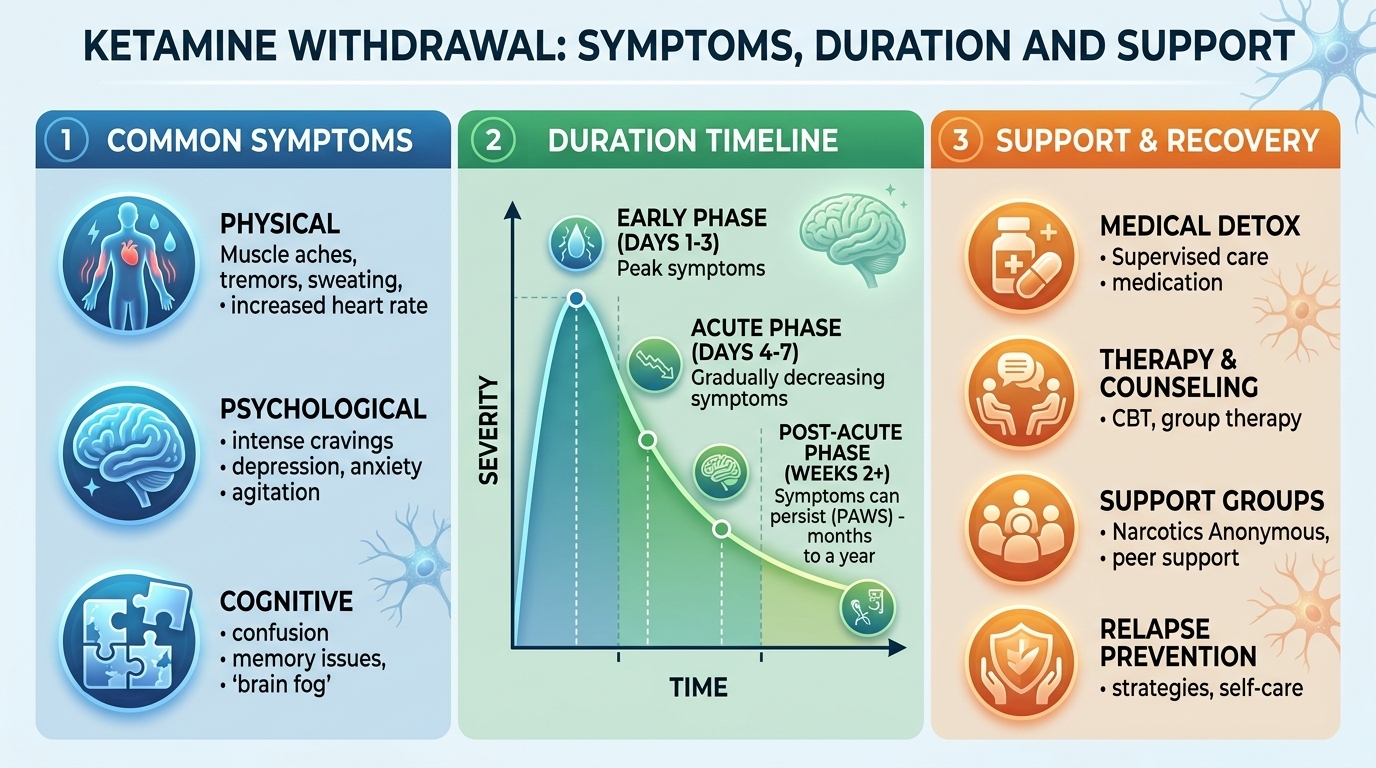
After the overuse of ketamine, the mind and the body may experience withdrawal symptoms. One of the main issues is often the cravings. An individual who knows he or she wants to stop using ketamine can still find a craving for it that is so intense they want to use it again.
Some other reported symptoms include: anxiety, low mood, restlessness, tiredness, sweating, shaking, chilliness, decreased appetite and a racing heartbeat. Additional symptoms may include sleep problems and nightmares.
Other, more severe psychological side effects have also been reported. This may lead to delusions and hallucinations, extreme anxiety, and strange thoughts. Some symptoms require medical intervention and particularly if they are widespread and worsening.
Psychological and Physical Symptoms
Ketamine withdrawal can involve both psychological and physical symptoms, but the experience can vary from one person to another.
Psychological signs can include cravings, agitation, restlessness, changes to mood or sleep. They may also feel unusually irritated, or struggle with concentration.
Physical symptoms can include sweating, shaking, tiredness, chills, changes in appetite and a racing heartbeat. But not all of the symptoms following Ketamine use are withdrawal symptoms. Ketamine addiction can lead to addiction rebound with the quitting of ketamine.
Certain examples in which the bladder and urinary system are affected by excessive levels of ketamine: Even bladder pain, frequent urination or blood in the urine should not be dismissed as being caused by withdrawal. They may require a medical evaluation.
Why Is There Less Evidence About Ketamine Withdrawal?
While there is less research on the phenomenon of ketamine withdrawal compared to other drugs, like alcohol or opioids, there are still a few studies that can be found. This is less efficient to give one clear description of what everybody should expect.
There is limited and low-quality evidence on managing ketamine dependence and withdrawal available for the 2026 ACMD review. There are also no specific medications for ketamine addiction, like some for other types of addiction.
This is not to say that there isn’t a problem of withdrawal. It implies that there are still better studies that need to be done to understand the causes of the symptoms, how long they last, and what is most effective in treatment.
How Long Can Ketamine Withdrawal Last?
No one withdrawal timeline fits all. The latest UK evidence reports that symptoms in heavy users can start within about 24 hours of stopping. They last for about 3 days but some can last for 2 weeks.
Duration and severity of symptoms can vary with an individual’s pattern of use and other health issues. Individuals who have been using it extensively over long periods of time may experience different levels of effects than individuals with less frequent use over only short periods of time.
Cravings or changes in mood may also continue after the main physical symptoms have settled. That is why continuous support might be beneficial in trying to quit.
When Can Professional Support Help?
You don’t need to go to extremes before reaching out for help. Your GP or drug treatment service can talk to you about your use of ketamine and help you determine if there is any support that is appropriate.
Professional assistance is particularly helpful if you use ketamine regularly, have difficulties quitting, and crave the drug or return to use it after abstaining.
It’s also important to note any other substances used. The use of combinations of ketamine and depressant substances (such as alcohol, opioids or benzodiazepines) can also be risky.
If you are taking prescribed ketamine, ask your prescriber first before you change or stop your treatment. Never change medication without a doctor’s direction.
NHS Drug Treatment Services
The NHS and local drug treatment services offer assistance to anyone with a drug problem in England. You can speak to a GP, who can assist you to link with a local service. Also, there are local drug treatment services you can reach out straight away.
Treatment can involve talking therapies, practical support, help with reducing harm and support with stopping drug use. The kind of help provided will vary based on a person’s condition and the substances they use.
There is also an online service offered by the NHS for finding drug treatment services near me in England. The relief of getting help doesn’t mean you need to do everything by yourself. Even if you aren’t ready to give up completely, it can be helpful to talk to someone trained in the field.
When Is Urgent Medical Help Needed?
Other symptoms from stopping ketamine require emergency treatment. Seek urgent help if someone develops severe confusion, hallucinations, extreme agitation, seizures, becomes unconscious or has serious difficulty breathing.
Long-term Ketamine use can also have severe physical symptoms that require medical assistance. Any blood in the urine, severe abdominal pain or bladder pain should never be neglected.
If someone is seriously unwell or in immediate danger, call 999 or go to A&E.
Key Takeaway
Ketamine withdrawal can occur when it’s used on a regular or excessive basis and may include symptoms including anxiety, low mood, cravings, sweating, shaking and sleep disturbances. Symptoms can appear in as short a time as 24 hours and are usually present for several days, sometimes for as long as two weeks. Treatment for the addiction can help, perhaps when cravings are intense or symptoms are severe.
References
https://www.gov.uk/government/publications/ketamine-an-updated-review-of-use-and-harms
https://www.nhs.uk/live-well/addiction-support/drug-addiction-getting-help
Evidence last checked: 27 September 2026