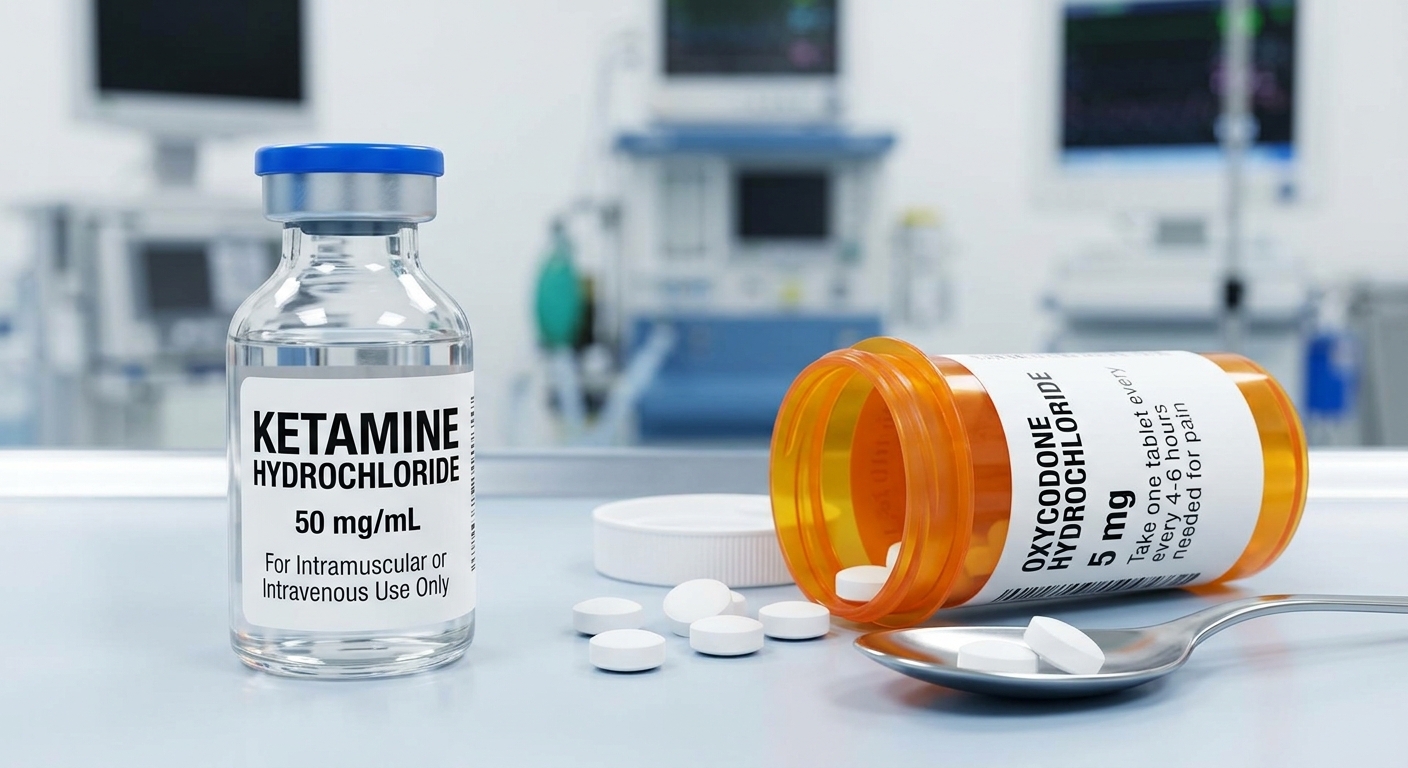
Medical care can be provided using either ketamine or opioids. Ketamine can be used as an anaesthetic or to relieve pain. Opioids also are prescribed to relieve a portion of moderate to severe pain. Both of these medicines can be found in health care environments and thus it is understandable that it is assumed that they are 100% safe to take together. No, this is not the case. These can be different for individuals and will depend on the medication used, the clinical setting and other factors. May be hazardous when used without instructions by the manufacturer or pharmacist. The risks of each medicine combined with another sedating medicine should be understood prior to its use.
Why Ketamine and Opioids May Appear Together in Medicine
There are medical applications of Ketamine. It may serve as anaesthetic or as an analgesic, that is, for pain control. In the UK, Ketamine is also used in a few specialist treatment centers as a treatment to facilitate treatment-resistant depression.
Another class of medications prescribed for pain are opioids. These include morphine, oxycodone and fentanyl. Various medications might be utilized as a component of a thoroughly planned treatment strategy. The treatment will depend upon the person’s condition and type of treatment needed.
This doesn’t imply that people must mix them on their own. Medical teams consider the person’s condition, other medicines and the need for monitoring before using medicines together. They also take into account any potential side effects and the effects that the medications have on breathing, alertness and movement.
Why Medical Use Does Not Make Unsupervised Mixing Safe
Medicines used together with medical supervision are different from medicines taken together without medical advice. This combination may be a good one in one medical situation and not another person’s.
In clinical conditions, the medical practitioner can observe respiration, consciousness, blood pressure, etc. They may also be able to give first aid in the event of serious reactions to treatment. Medical professionals may modify or discontinue treatment as appropriate.
In other areas, such protections might not be available. Risks can also alter when alcohol or benzodiazepines or other sedating substances are involved. The UK government advises specifically against using ketamine when combined with other drugs that cause depression, like opioids, as it can significantly increase the risk of overdose and other negative effects. Hence, medication that is prescribed should only be mixed together if appropriate as instructed by a healthcare professional.
Sedation and Breathing Risks
There is a risk of sedation overload. The person may become extremely sleepy, go into confusion or not wake up easily. Their awareness can also become impaired. They might not notice that they are getting very sick or be unable to get the attention of others.
People can become very sleepy or stop breathing when they overdose on opioids. Signs of warning are things that are unusual when you are sleeping, small pupils, blue or purple lips or fingernails, losing consciousness, trouble breathing.
Ketamine may also cause lack of awareness and coordination. Mixing substances may make it more difficult to assess the severity of an illness. Someone can also be at a higher risk of falling, getting hurt, or someone else cannot communicate with the individual.
The mixing without supervision can be very dangerous under such circumstances. The effects may also vary depending on the type of medicine and on the quantity of medicines consumed and any other substances present.
Monitored Medical Use vs Non-Medical Use
Medical use occurs in a controlled environment. A medical profession’s decision is made regarding if a medicine is suitable. The patient can also monitor throughout the treatment. This enables staff to monitor breathing, alertness, etc. for changes.
Non-medical use is an entirely different thing. The quality of a substance and its composition could be unknown. Another person might have consumed another medication or substances (drugs) that they were unaware of and had not considered how they may interact. A professional may also not be on hand to recognise signs of an emergency.
The 2026 UK government review on ketamine suggests that the use of depressants (such as opioids) should not be used with the drug as it can significantly heighten the risk of being overdosed.
This is particularly crucial when combined with a person’s current use of prescription opioids. They should let their doctor or pharmacist know of all medicines or substances used. This will provide the healthcare professional with a better idea of potential interactions and safety issues.
Opioid Overdose Warning Signs
Opioid overdose is an emergency condition. They may have very slow or stopped breathing, not be able to wake the person, blue or purple lips or fingernails, unusual snoring, severe confusion, and very small pupils.
Help cannot be sought until a person exhibits all the signs. If an opioid is suspected, it’s important to get comprehensive medical help immediately after the first sign of trouble.
Seek aid immediately and treat any unresponsiveness or severe breathing difficulty after having taken an opioid as it is an emergency situation. Do not think that they would “sleep it off.” If the person doesn’t respond, emergency assistance might be needed.
It may help emergency personnel identify chemicals and medications that could have been taken. If you are not 100% certain, let them know about these things so they will be able to make a good judgement about the situation.
Where Naloxone Fits In
Naloxone is an emergency drug that can reverse the effects of opioids during an opioid overdose. It can be used to treat overdoses of drugs that contain the ingredient heroin or other opioids (medicines or very strong synthetic opioids).
Ketamine does not cause naloxone to have any effects. This is important in cases of polydrug use. Even if a person has been given naloxone and breathing has improved, a person might need emergency medical evaluation.
This article does not contain dosing information. During emergency situations, use naloxone as directed by instructions in the accompanying package (and seek emergency medical assistance if available). Naloxone is not a substitute for calling 999.
Emergency services should still be called as the effects of opioids can last beyond the length of time that naloxone lasts. It is particularly critical to make a professional determination if more than one substance is suspected to have been involved.
When to Call 999
If someone collapses, stops breathing or is at a risk of choking, or someone has a seizure call 999 immediately. These can be indicators of a serious and life-threatening emergency.
Wait until assistance has been reached before departing. Inform the emergency operator the information that you have regarding what they might have taken. This can assist the health care providers to know what happened, and provide correct treatment. Provide any medicine packets or bottles for the emergency team close by if possible.
But if you feel that the person is not in senses and can’t take the breath properly, then follow the emergency caller’s instructions. Also, the main point is that never leave them alone until and unless the team reaches.
If you are unsure, call NHS 111 for urgent advice. However, if they are unconscious, stopped breathing or have serious breathing difficulties, then don’t wait for NHS 111. Call 999 straight away.
Key Takeaway
Ketamine and opioids may both be used in medical care, but combining them without medical supervision can increase the risk of heavy sedation, breathing problems and overdose. The risk can be higher when other sedating substances, such as alcohol or benzodiazepines, are also involved. If someone becomes unconscious or has serious breathing problems, call 999 immediately.
References
https://www.gov.uk/guidance/opioid-medicines-and-the-risk-of-addiction
https://www.gov.uk/guidance/supplying-take-home-naloxone-without-a-prescription
https://www.nhs.uk/conditions/poisoning
Evidence last checked: 26 September 2026