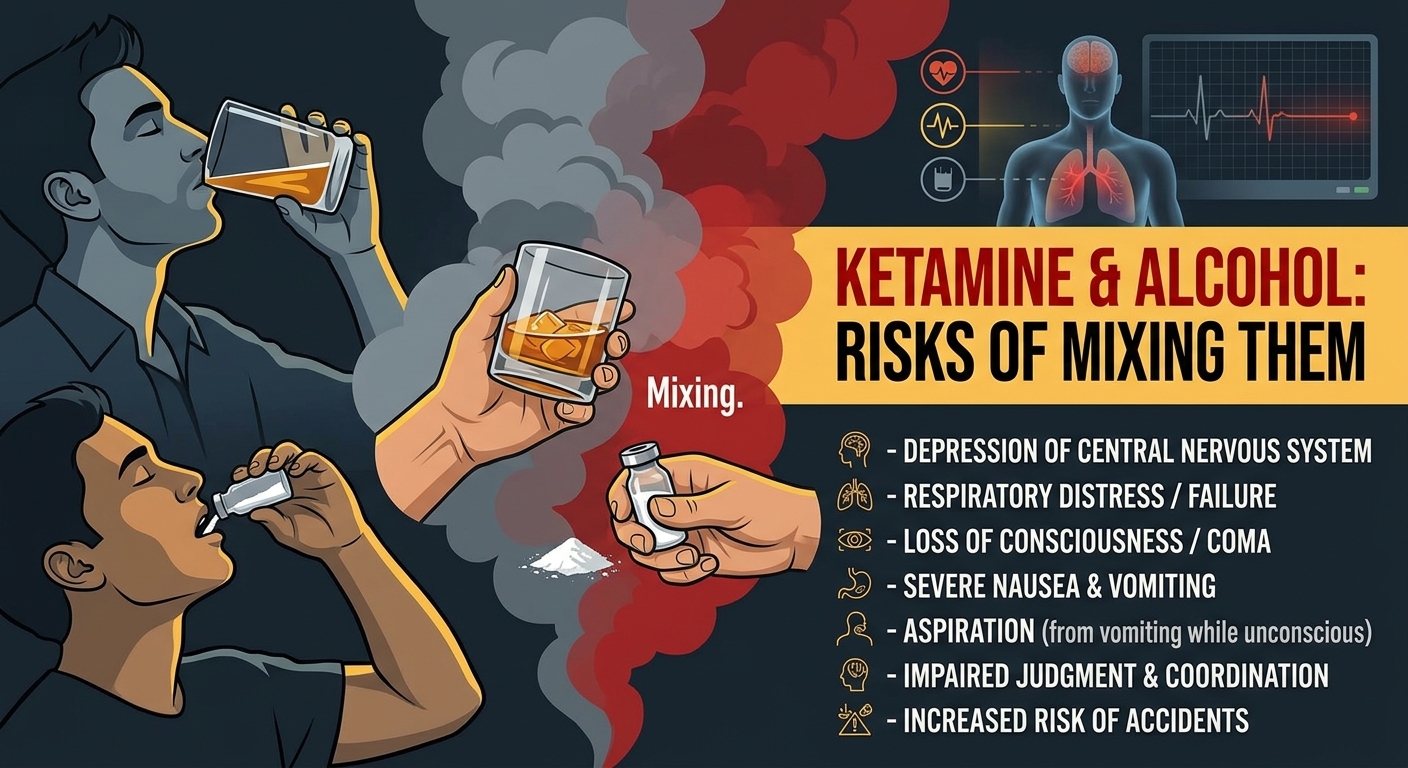
Basically, these two Ketamine and alcohol may not be a good combination. Both of them act on the brain and alter the brain’s functioning in terms of awareness, movement, and judgement. These effects are more difficult to predict when combined together. He or she may become very sleepy, confused or dizzy. At times they can become unconscious or may have difficulty breathing.
Risk may differ from individual to individual. It may also be related to the amount of alcohol or ketamine that has been consumed and the timing of this consumption, as well as the presence of any other medications or drugs. The NHS guidelines for the prescription of Ketamine also recommend not consuming alcohol as this can enhance some side effects.
Is Mixing Ketamine and Alcohol Risky?
Yes, because it is very clear when we combine these two it may raise very serious concerns to the patients. If a person is healthy and fit, if he or she drinks alcohol, it will be dangerous for that person also then how can we think that there is no risk if we combine medicine with alcohol. Ketamine is an anaesthetic drug from a class of drugs known as dissociative anaesthetic.
By taking this medicine, it can lead to changes in sensory awareness. It can also cause
drowsiness, confusion, blurred vision, nausea, vomiting and loss of co-ordination, so it all depends on the patient. Every patient has its own immunity system, so maybe the effects are different for each patient.
If we talk about alcohol, it affects the central nervous system. This drink makes a person feel sleepy, like he or she does not sense what they are doing. If they do overuse of alcohol, this can lead to vomiting, unconsciousness and serious incidents.
When taken together they can make them harder to handle. An individual might be unaware of how affected he or she is. They may not also be able to estimate their intake of alcohol or ketamine and its impact on them. No one can make a confident prediction about just how an individual will respond.
How Ketamine and Alcohol Affect the Central Nervous System
The brain and spine are part of the central nervous system. It regulates several vital processes, such as mobility, perception and reactions to the environment. Ketamine alters a person’s brain signal processing. May lead to feeling alien from oneself and the environment. There might be changes in vision, confusion or hallucinations in some. It may also cause a loss of balance and coordination.
Alcohol also has a different impact on the brain, but can also be a factor in decreased alertness and slower reactions. High doses can lead to excessive sleepiness, confusion and coma.
When the effects are combined, an individual may be quite unaware of what is happening around him or her. May not be aware of injuries. They may also be unable to react as they should in case of any misfortune. One of the reasons why it is dangerous to mix substances. The person might initially seem very sleepy, but may get more serious.
Alcohol should also be discussed with the healthcare provider for those who are prescribed ketamine treatment. There are also some NHS ketamine services that recommend that alcohol consumption be avoided before and after ketamine treatment due to the potential of exacerbating side effects.
Sedation and Loss of Consciousness
A primary issue is the sedation which can increase. Sedation is extreme relaxation, drowsiness or decreased awareness. If it is more severe the individual may be hard to wake or have a loss of consciousness.
Excessive amounts of alcohol can cause extreme sleepiness and even unconsciousness. Another effect of ketamine is that it may make a person sleepy and confused.
But an unconscious person suffers from the inability to protect him or herself adequately. Maybe they can collapse, vomit or suffer from severe breathing.
Coordination, Falls and Accidents
Ketamine may cause a loss of balance, coordination or sight. Alcohol can also cause a decrease in coordination and slower reactions. These effects can combine to increase the risk of accidents.
Someone who has taken both may have trouble walking in a straight line. May fall when climbing down stairs, walk into objects or have a poor sense of distance. Also, they can make poor choices as their judgment might be impaired.
Another effect of ketamine is to lessen the perception of pain. This could result in a person injuring themselves without realising. According to the NHS website, the side effects of ketamine include loss of co-ordination, problems with vision and drowsiness.
This can be exacerbated by alcohol. NHS advice also associates excessive consumption of alcohol and accidents, injuries and bad judgment. Another serious problem is driving. An individual under the effects of ketamine and alcohol can have poor reactions, lack attention and judgement. Don’t allow them to drive or operate machinery.
Vomiting and Aspiration Concerns
Ketamine can make a person feel sick and make them vomit. Another possible side effect of alcohol is to trigger vomiting, particularly after drinking a significant amount. It’s more dangerous for the person to be extremely sleepy or not conscious when they vomit.
Someone who’s not fully alert may not be able to sit up or turn his or her head when vomiting. Vomit may go straight into the lungs, rather than the esophagus. This is referred to as ‘aspiration’.
There is a possibility that severe breathing problems can be caused by eating or drinking. Because of this reason, it is very important that we don’t leave an unconscious person alone, this is not a good idea.
The NHS recommends unconsciously patients who are still breathing to be placed in the recovery position. This will help to keep the airway open and will prevent vomit from draining back into the mouth. Do not try to make an unconscious or poisoned person vomit. The NHS say they don’t like this as they might choke.
Why the Effects Can Be Unpredictable
It’s impossible to predict the interaction of any individual with ketamine and alcohol. Individuals vary in their body size, tolerance, health, drug metabolism and drug sensitivity. The dose of alcohol and ketamine are also factors. So does a gap between them.
Other chemicals can make it even more challenging to forecast. For instance, the combination of ketamine and other central nervous system depressants may cause severe and unpredictable impacts. The NHS advises against mixing ketamine with other drugs and alcohol as this may pose a greater risk of causing serious harm.
The strength and contents of non-medical drugs could also be unknown. This places yet another risk factor. Therefore, it cannot be assumed that a small dose affects each person exactly the same.
Someone might also underestimate his or her impairment because he or she is not feeling sleepy or may still be able to speak. Their condition may progress after this.
What to Do If Someone Becomes Seriously Unwell
If someone has taken ketamine and drunk alcohol, and they get seriously ill, stay by them and get medical assistance.
If the person:
- Is unconscious or cannot be awakened.
- Does not breathe properly.
- It is extremely hard to breathe.
- He or she has a seizure.
- Has fallen over and is badly injured.
- Has observed another symptom of a life threatening emergency.
The NHS recommends that you call 999 for help if the person is not feeling well, don’t ignore their symptoms.
When to Seek Medical Help
Not all situations will present a clear sign of an emergency. A person could have a fever but not be conscious. If you’re concerned about symptoms following ketamine and alcohol use, contact medical care.
In England, NHS 111 may be able to help to determine symptoms and recommend a next step. You can seek urgent medical help by calling 999 if symptoms are severe or life threatening.
Never ignore the symptoms, if you feel that he or she might become serious because if we ignore, we might face a major loss.
Key Takeaway
Mixing ketamine and alcohol can increase drowsiness, confusion, poor coordination and the risk of losing consciousness. The effects can vary depending on the amounts taken, timing, health, tolerance and other substances involved. Avoid driving or being alone after mixing them, and call 999 if someone becomes unconscious, has severe breathing problems or has a seizure.
References
https://www.nhs.uk/nhs-services/urgent-and-emergency-care-services/when-to-call-999
Evidence last checked: 25 October 2026